
Top 10 Supplement Market Trends in Europe (2025 Edition)
The European supplement market is not just growing — it’s evolving. For brands, manufacturers, and private-label players, understanding the shifts is no longer optional. Here are the 10 critical trends shaping 2025 and beyond — what they mean, and how you can act on them today.
1. Preventive & Self-care Nutrition Becomes Routine
Consumers in Europe increasingly view supplements as everyday insurance rather than occasional treatment. With rising healthcare costs and aging populations, preventive nutrition has moved from niche to norm.
- The European dietary supplement market was valued at USD 45.64 bn in 2024 and is projected to grow at a CAGR of around 8.3% to 2033
- A report also estimates a 9% CAGR across 2025-2033 toward USD 105+ bn.
What you should know: Prioritize daily-use formulas (multivitamins, minerals, adaptogens) and design packaging/distribution to match habitual purchasing.
2. Digital/Online Sales Channels Explode
E-commerce and direct-to-consumer (DTC) models are quickly becoming the dominant routes for supplements in Europe.
According to IMARC, the shift towards online retail is a major driver of growth.
Action point: Make sure your fulfillment, labeling, unit economics, and private-label offer are aligned for rapid online selling.
3. Clean Label, Natural & Plant-based Claims Dominate
Transparency isn’t a trend — it’s a requirement. “Clean label” with easily understood ingredients, plant-based sourcing, and minimal additives are now expected.
The European vegan supplements market alone is projected to grow at a CAGR of 9.4% between 2025-2030.
Tip: For your private-label lines, highlight standardized extracts (e.g., 5% withanolides), third-party testing, and simple ingredient lists.
4. Personalization & Micro-niche Formulas Gain Traction
Mass-market supplements are being supplanted by targeted offerings (sleep support, cognitive boost, gut health, etc.).
Why it matters: Consumers want specific outcomes, which opens the door for smaller lot production and niche SKUs.
Recommendation: Build your private-label portfolio with “kit” products (e.g., Stress & Sleep Reset Kit) and allow flexible lead-times for smaller batches.

5. Format Innovation: Powders, Gummies, “On-the-Go”
Besides tablets and capsules, powders, softgels, gummies, and stick-packs are gaining popularity — especially among younger consumers.
Grand View Research expects the powder segment in Europe to grow at ~9.6% CAGR 2025-2033.
What to do: Ensure your contract/white-label manufacturing partner can handle formats beyond standard capsules — and mention this flexibility in your B2B offering.
6. Functional Blends & Adaptogens Move Upstream
Botanical extracts and “purpose-driven” formulas (e.g., stress support, sleep aid, cognitive clarity) are in high demand.
Insight: At BULKvitamins, this plays directly into our private-label model — where clients expect unique combinations and fast time to market.
Key areas: Ashwagandha, Rhodiola, lion’s mane, magnesium-based blends, etc.
7. Eco-conscious Packaging and Sustainability
Consumers increasingly care about the entire product experience, including packaging. From refill pouches to recycled bottles, brands are under pressure.
Reminder: While sourcing eco-packaging often costs more, highlighting sustainability can be a differentiator — provided you’re transparent about specs and sourcing.
8. Regulatory Pressure & Quality Standards Increase
Compliance is no longer a baseline — it’s a competitive advantage. Strong manufacturing practices, traceability, and harmonised labeling across Europe matter more than ever.
IMARC notes stricter regulation and labeling standards as key growth drivers.
For private-label brands: Make sure you can show GMP, ISO, COA and communicate that clearly to retailers and end consumers.
9. Supply Chain Agility & Bulk Formats Gain Value
Brands are shifting towards bulk formats, fewer SKUs, faster restocks, and tighter cost control.
Grand View Research forecasts the market to hit ~USD 124 bn by 2030.
Takeaway: For BULKvitamins clients, this means offering low MOQs, fast European production and packaging flexibility — while being transparent on cost and lead-time.
10. Data, AI & Subscription Direct Models
Smart brands are integrating data, subscription models, and automation to retain customers and drive repeat business.
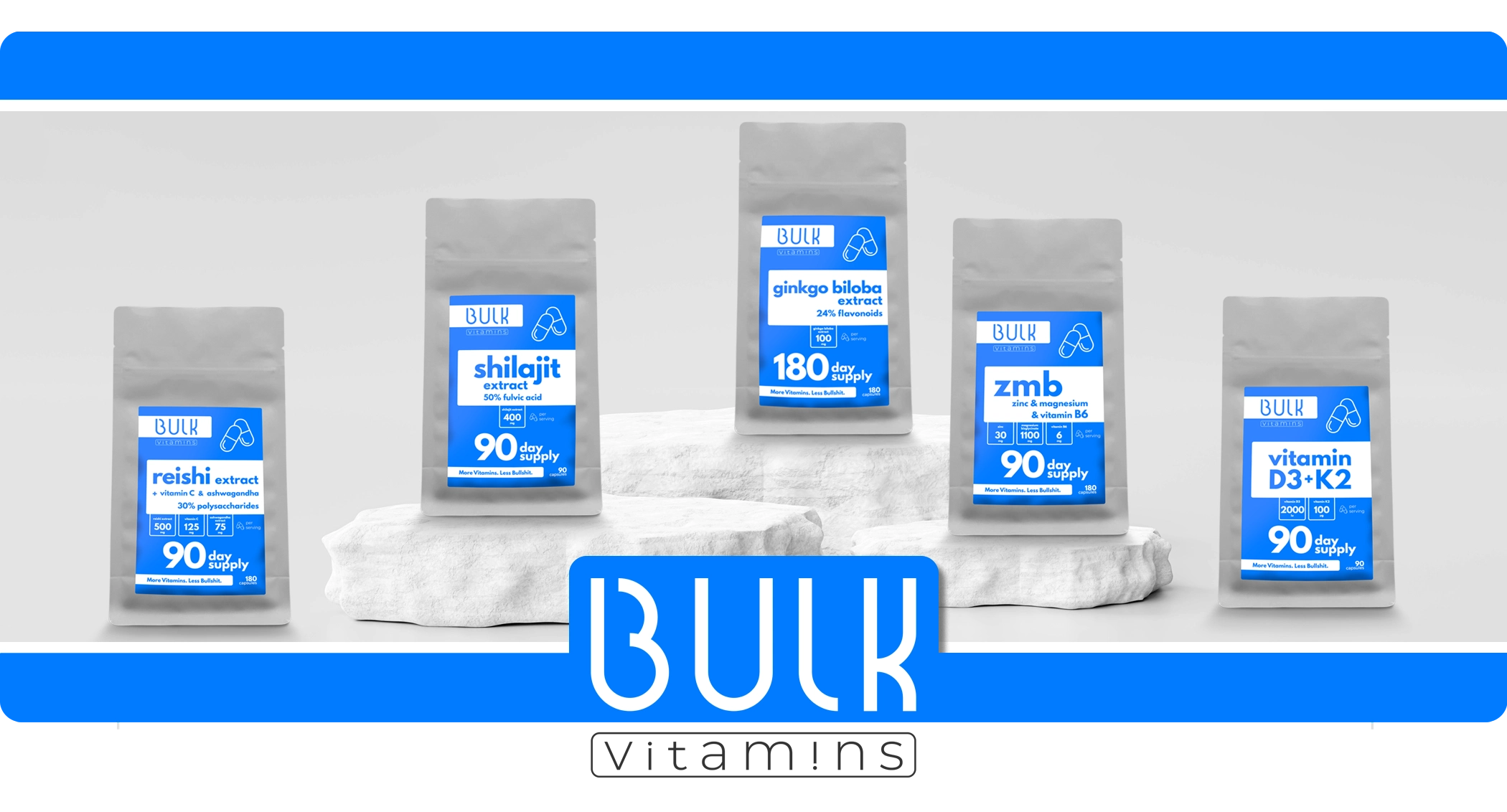
Why this matters: Lifetime value (LTV) is more important than unit margin. If your private-label partner supports repeat purchase (e.g., 90-day bulk formats), you can lock in subscription-ready SKUs.
Summary
The European supplement market for 2025 is biggest yet, but also fastest changing.
For brands, the winning formula will be:
- real quality (& transparency)
- agility & smart sourcing
- formats & bundles built for subscription & digital
- and packaging/production that supports lower costs + faster time-to-market.
At BULKvitamins, we live this every day — because “more vitamins, less bullshit” isn’t just our slogan — it’s our approach.

